Studentvue
Find My Studentvue School Portal
Easily navigate your school portal , find student portal, parent portal and login page.
If you can’t find your School portal then you can submit your school data for others. Submit your portal here.
Remember when students had to wait for a paper report card to come in the mail to see how they were doing in school? A long time ago, a student would go to school every day for nine whole weeks without really knowing their exact grade.
Then, one day, a piece of paper would arrive in the mail. Sometimes it was good news, and everyone celebrated! But sometimes, it was bad news. And the worst part? By the time you saw that bad grade, the nine weeks were over. It was too late to fix it, too late to ask for extra help, and too late to turn in missing homework.
Those days are completely over for student vue login.
Today, it is super easy to check your school progress at any time, day or night. You can check it from your bed, from the school bus, or from your kitchen table. This is all thanks to a very powerful tool called StudentVUE.
studentvue student is a secure website and a mobile phone app made by the Synergy Education Platform. Many, many schools across the whole country use it. It completely changes how school works. Instead of just waiting nervously to be told what your grades are, you get to be the boss of your own learning.
Important School links
| School name | Keyword | State |
|---|---|---|
| Montgomery County Public Schools | studentvue mcps | Maryland |
| Fairfax County Public Schools (FCPS) | sis studentvue | Virginia |
| Norfolk Public Schools | studentvue nps | Virginia |
| Prince William County Schools | studentvue pwcs | Virginia |
| Buckeye Union High School District | studentvue buhsd | Arizona |
| Charles County Public Schools | studentvue ccps | Maryland |
| Kern High School District | studentvue khsd | California |
| Loudoun County Public Schools | studentvue lcps | Virginia |
| Prince George’s County Public Schools | studentvue pgcps | Maryland |
| Stafford County Public Schools | studentvue stafford | Virginia |
| Fairfax County Public Schools (FCPS) | studentvue fcps | Virginia |
| Scottsdale Unified School District | studentvue susd | Arizona |
| Elk Grove Unified School District | studentvue egusd | California |
| Prince George’s County Public Schools | synergy studentvue | Illinois |
| Eugene School District 4J | studentvue 4j | Oregon |
| Bellevue School District | studentvue bsd | Washington |
| Hillsborough County Public Schools | studentvue hcps | Florida |
| Imperial Unified School District | studentvue imperial | California |
| Kern High School District | studentvue kern high | California |
How to use StudentVUE tool works
Note: If you can’t find your School url then you can submit your school on submit form
A Tale of Two Students
To understand why Student VUE is so important, let’s look at a story about two different students.
Student A (The Guesser): Student A goes to class, does their homework most of the time, but never checks StudentVUE. In math class, they did a big worksheet but forgot to put their name on it.
The teacher couldn’t give them a grade, so the teacher put a “zero” in the grade book. Student A doesn’t know this happened. A month goes by, and Student A thinks they have an “A” in math. When report cards come out, they actually have a “C” because of that one missing worksheet. Now it’s too late to fix it.
Student B (The Boss): Student B also goes to class and does their homework. Student B also forgot to put their name on that same math worksheet. But Student B checks StudentVUE every Sunday night.
On Sunday, Student B sees a big red “Missing” flag and a zero for the worksheet! Because they checked the app, Student B goes to the math teacher on Monday morning and says, “Excuse me, I think I turned this in, but it might not have my name on it.” The teacher finds the paper, updates the grade, and Student B keeps their “A”.
Student B isn’t smarter than Student A. Student B just used their tools better!
This guide is made for students (and their parents) to learn exactly how to use this tool to be like Student B. We will explore how to log in, how to understand the confusing numbers, how to send emails to teachers, and how to build good habits so you can succeed without stressing out.
If you ever get stuck while reading, you can always jump down to our Glossary of Confusing School Words or the Frequently Asked Questions (FAQ) section at the bottom of this page!
The School Apps
Before we learn how to click around inside Student VUE portal, we need to solve the biggest, most frustrating problem most students and parents have: App Confusion.
If your school uses StudentVUE, they probably also use other apps like Google Classroom, Canvas, or Schoology. You might be looking at your phone right now and seeing three different school apps.
This causes a lot of arguments at home. A parent might ask, “My child finished their homework in Google Classroom, so why does StudentVUE say they have a zero?” Or a student might say, “I turned it in on Canvas, why is my grade still bad?”
To be a pro at school, you have to know the difference between your Learning App and your Records App. If you don’t know the difference, you will always be confused.
The Learning App vs. The Records App
Let’s use a very simple example to explain this.
While you might see a quick grade on a spelling test pop up in Canvas, studentvue student is the final, official boss.
Why Don’t They Match Exactly?
This is the biggest secret you need to know: The two apps do not talk to each other instantly.
Imagine you finish a big puzzle in Google Classroom at 8:00 PM on a Tuesday. Google Classroom says “100%!” But when you open StudentVUE at 8:01 PM, it still says you have a zero. Why?
Because the apps usually only “talk” to each other in the middle of the night. Or, sometimes, your teacher has to push a special button on their computer on Friday afternoon to send the grades from Google Classroom over to Student VUE. So, if you finish an assignment, you must be patient. It might take a few days for the good grade to travel from your “School Desk” (Google) to the “Principal’s Office”.
Which App Does What?
Here is a simple cheat sheet you can use if you ever get confused about which app to open.
| What do you want to do? | Learning App (Canvas, Google) | Records App (Student VUE) |
|---|---|---|
| “Where do I read today’s assignment?” | Here. Teachers post the rules here. | Not here. |
| “Where do I turn in my typed essay?” | Here. You upload your files here. | Not here. |
| “What is my final grade for the whole year?” | Not here. Grades here are just practice. | Here. This is your official grade. |
| “How many days of school have I missed?” | Not here. | Here. This tracks your attendance. |
| “Who looks at this app?” | Just you and your specific teacher. | You, all your teachers, your parents, and the principal. |
The Golden Rule to remember forever: Do your everyday homework in the Learning App; check your official final grades in Student VUE portal.
Access and Easy Navigation
Okay, now that we know what student vue student portal is, let’s talk about how to get inside it. StudentVUE portal is built so you can check it on a big computer screen or on a small mobile phone screen. Let’s learn how to get set up.
ParentVUE vs. StudentVUE: Two Different Doors
While this whole guide is mostly written for students, parents should know they have their very own app. It is called ParentVUE.
Why do parents and students have different apps? Because parents are adults and they need to be able to do different things! Think about it like driving a car. The student is the passenger who can look at the map and change the radio station. The parent is the driver who has the keys to start the engine and lock the doors.
Computer Browser vs. Phone App
You can look at VUE Student in two different ways, and both are great for different reasons.
Download the Apps
To make things super easy, here are the direct links to download the official apps to your phone or tablet. Make sure you pick the right one for who you are and what phone you have!
| App Name | Who is it for? | Apple (iPhone/iPad) Link | Android (Google/Samsung) Link |
|---|---|---|---|
| StudentsVUE | Students | iOS | Android |
| ParentVUE | Parents / Guardians | iOS | Android |
| TeacherVUE | Teachers | iOS | Android |
| AdminVUE | Admin | iOS | Android |
| KioskVUE | Kiosk | iOS | Android |
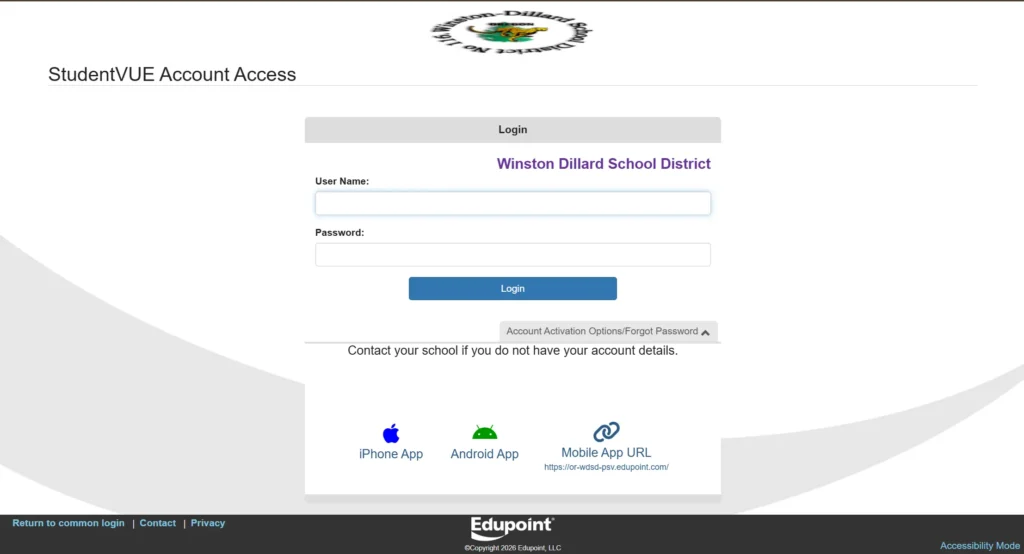
How to Log In Securely
StudentsVUE holds very private information. It has your home address, your birthday, and all your grades. Because of this, it is locked up very tight. You need a special key to get in.
Core Features: Your Daily Dashboard
When you log in successfully, you will see a main screen called a Dashboard. It looks a bit like the home screen of a video game. On the left side of the screen, there is a menu with lots of different buttons. Let’s look closely at the most important buttons you will use every single week.
1. The Grade Book: Understanding Your Scores
The Grade Book button is where you will spend 90% of your time. When you click it, you will see a list of all your classes: Math, Science, English, Gym, Art, etc. Next to each class, you will see a big letter grade, like an “A” or a “C”, and a percentage, like “92%” or “75%”.
But looking at your big letter grade is only a tiny part of the story. You need to know why you have that grade.
When you click on a specific class, like “Science,” it opens up a new page. This page shows a giant list of every single assignment, quiz, and test you have done since the school year started.
Practice vs. The Boss Fight (Formative vs. Summative)
This is a very important secret to understanding school. Many teachers use something called “weighted” grades. This means some homework matters a lot more than other homework. Let’s think about it like a video game again.
Pro Tip: Let’s say you have a “B” in Science and you really want an “A”. You look at your calendar and see you have a big “Summative” Boss Fight Test on Friday. You also have a tiny “Formative” practice worksheet due on Thursday. Do not spend three hours making the tiny practice worksheet look perfectly colorful with markers! Spend 15 minutes on the worksheet, and spend two hours studying for the big Boss Fight Test! Students VUE helps you see which assignments are Practice and which are Boss Fights so you can use your brain power wisely.
Missing Assignments, Zeroes, and Flags
When you look at your list of assignments in Students VUE, you might see some colorful words or flags next to the scores. You need to know what these mean!
2. Attendance Tracking: Being There Matters
Going to school every day is a big deal. In fact, there are laws about it! The U.S. Department of Education studies students and they found out that missing too much school makes it really, really hard to learn and graduate. Even missing just two days a month adds up to missing almost a whole month of school by the end of the year!
studentvue login lets you see your attendance instantly.
3. The Calendar & Class Schedule
The calendar button in StudentVUE login is like a magic crystal ball. It puts all your due dates, school holidays, and big tests into one easy picture.
Finding Your School Hours and Bell Schedule
Every school has different starting times and ending times. Sometimes, it is really hard to remember when your 3rd-period class ends, exactly when lunch starts, or when you are supposed to go home!
StudentVU has a special section just for this. If you click on School Information in the menu, you can usually find your school’s official Bell Schedule. This tells you your exact school hours, minute by minute.
Knowing your exact school hours helps you stay out of trouble and makes sure you are never marked tardy!
Beyond the Basics: Planning for Your Future
The Grade Book and the Calendar are great for handling “today” and “tomorrow.” But as you get older, school becomes about preparing for your future—like high school, trade school, or college. StudentVU has special tools hidden in the menu to help you plan years in advance.
Course History and Transcripts
When you get to high school, everything you do goes onto a super important piece of paper called a Transcript. Your transcript is like your academic passport. If you want to get a job or go to a college, they will ask to see this passport. The Course History button shows you a digital copy of your passport.
Course Requests: Picking Your Classes Like a Menu
When you are in elementary school, the school tells you exactly what class to sit in. But when you get older, you get to choose! In the spring time, a special button called Course Requests turns on in StudentVU.
This is where you get to pick your classes for next year. It is like looking at a giant restaurant menu and deciding what you want to learn. Do you want to take Cooking, Robotics, or Spanish? You click the buttons in the app to send your choices to the school counselor.
Checking the Rules (Prerequisites): The app is very smart and knows the school rules. Some classes require you to take a beginner class first. This is called a “prerequisite.” If you try to put “Advanced Spanish 2” on your schedule, but you haven’t taken “Beginner Spanish 1” yet, the app will pop up a red warning and stop you. It helps you build a schedule that makes sense.
The Document Vault
Schools generate so much paper. Permission slips, health forms, report cards, state test scores—it can fill up a whole filing cabinet! The Documents tab in StudentVUE is a safe, secure digital box for all your important papers.
Seamless Communication and Fixing Problems
Going to school is not a solo mission. It works best when students, teachers, and parents all work together as a team. If you are struggling, you have to talk to your team! StudentVUES has tools built right into it to make talking to each other really easy and fast.
Emailing Teachers the Easy Way
There is a messaging button built right into the app. Sometimes it is called “Synergy Mail.” This is much better than trying to catch your teacher in the hallway while it’s noisy and everyone is running to the buses.
If you click on a teacher’s name in your class schedule, a blank email pops up. Here is why this is awesome: Because you are logged into my studentvue , the email automatically tells the teacher exactly who you are. It puts your name, your student ID number, and what period you are in right at the top! The teacher doesn’t have to guess which “Alex” sent the email.
Custom Alerts and Phone Notifications
If you use the mobile phone app on an iPhone or Android, you can set it up to send alerts (push notifications) that pop up on your screen.
But WARNING: You must be careful with this! Getting too many alerts from your phone can make you feel very stressed, anxious, and annoyed. If your phone buzzes every 10 minutes about school, you will start to hate your phone.
You need to go into the “Settings” button in the app and choose your alerts carefully. Here is the perfect way to set up your alerts so you stay informed, but stay calm:
| Type of Alert | What you should do | Why? |
|---|---|---|
| Missing Assignment Warning | Turn ON | This is an emergency alert! You need to know right away if you forgot to turn something in so you can fix it before it ruins your grade. |
| Marked Absent/Tardy Warning | Turn ON | If a teacher makes a mistake and marks you absent when you are actually at school, this alert lets you fix it that exact same day. |
| Grade Drops Below a Certain Letter | Turn ON | The app lets you set a rule: “Alert me only if my grade drops below a C.” This is brilliant. It acts as a great early warning system. |
| Alert for Every Single Tiny Grade | Turn OFF | Getting a buzz on your phone every time the teacher grades a tiny 5-point vocabulary worksheet will just make you nervous and distracted. |
Building Good Habits
Having an app in your pocket that shows your grades 24 hours a day, 7 days a week is like having a superpower. But like all superpowers in comic books, you have to learn how to use it responsibly, or it will hurt you! Here are the best tips from top students on how to be a pro.
1. Build a Weekly Routine (Do Not Check It Every Hour!)
This is the biggest mistake students make: checking their grades five times a day. If you do this, you will drive yourself crazy. Teachers do not update grades every hour. A teacher might have 150 students! They usually only sit down to grade papers on the weekends or during a special free period on Thursdays. If you look at your phone on Tuesday morning, and then look again on Tuesday afternoon, nothing will have changed.
You Need to Try the “Sunday Evening Audit”: An audit is when you check to make sure everything is correct. You should only look at Student login VUE once or twice a week. Sunday night after dinner is the perfect time.
Here is your step-by-step Sunday routine:
3. Keep Your Password a Secret
VUE Student login has your home address, your private grades, and your test scores in it. Treat it exactly like a bank account with a million dollars in it.
- Never give your password to your friends, even if they say they just want to see your schedule.
- If you use a school library computer, or a computer in the computer lab, always click the “Log Out” button when you are done! Just clicking the red ‘X’ on the internet browser does not always log you out. The next person to sit down could see all your information. Always click “Log Out.”
Glossary of Confusing School Words
Sometimes schools use really big, confusing words. If you see a word in Student VUE portals that you don’t understand, check this dictionary!
Conclusion
Moving from waiting for paper report cards to having an app like Students VUE in your pocket is a giant step. It takes away the mystery of how you are doing in school. No more guessing, no more hoping, and no more bad surprises at the end of the year.
But remember this very important truth: Portal Student VUE is just a mirror. It only shows you a reflection of what you are doing. It is not trying to be mean if your grade is low; it is trying to guide you. If you don’t do your homework, the mirror shows a bad grade. If you study hard and turn in your work, the mirror shows an amazing grade!
The app gives you the numbers, but you have to do the hard work. The computer cannot study for you. By checking your grades once a week on Sunday nights, sending polite emails to your teachers when you need help, and doing your daily work in your Learning App, you will become an incredible, unstoppable student.
Now, go download the app, check your grades, set your alerts, and take complete control of your school year!