ParentVue
Find My ParentVue School Portal
Easily navigate your school portal , find parent portal, and login page.
Do you remember the old days? A long time ago, finding ParentVue out how your child was doing in school was a giant mystery. Parents would send their kids to school with a lunchbox and a backpack, and then they just had to wait.
You waited for a phone call from the teacher. You waited for a parent-teacher meeting. Or, you waited nervously for a paper report card to come in the mail every nine weeks.
Sometimes that report card brought good news and pizza dinners! But sometimes, it brought a terrible shock. The most frustrating part of the old days was this: by the time you saw a bad grade on a piece of paper, the school term was already over. It was too late to hire a tutor. It was too late to ask the teacher for help. And it was way too late to find that missing homework hiding at the bottom of your child’s backpack.
Synergy Parent VUE is a secure website and a mobile phone app made by a company called the Synergy Education Platform. Thousands of schools all over the country use it. It completely changes how parenting works. Instead of waiting for a teacher to tell you there is a problem, you get to be a helper and a co-pilot.
A Simple Story of Two Parents
To understand why ParentVUE is so amazing, let’s look at a story about two different parents.
Parent A (The Guesser): Parent A is a loving parent. Every night at dinner, they ask their child, “Do you have any homework?” The child always smiles and says, “Nope, I finished it at school!” Parent A believes them and never checks their Parent Vue app.
But in math class, the child has actually missed three big homework assignments. The teacher put three “zeroes” in the computer. A whole month goes by, and Parent A thinks their child has an “A”. When the official report card finally comes out, the child has a “D”. There are tears, shouting, and groundings. But it is too late to fix the grade.
Parent B (The Co-Pilot): Parent B is also a loving parent. Their child also says, “I don’t have homework!” at dinner. But Parent B has a special Sunday night routine. On Sunday, Parent B opens their ParentVUE account. They see three big red “Missing” flags in math class!
Parent B sits down with their child, empties the messy backpack, finds the missing worksheets, and has the child finish them that very night. The child turns them in on Monday morning for partial credit. The grade stays a “B”. There are no tears and no terrible surprises.
Parent B doesn’t love their child more than Parent A. Parent B just used their digital tools to stop a disaster!
This guide is made for parents, grandparents, and guardians. It is written in very simple English so you can learn exactly how to use this tool to be like Parent B. We will explore how to log in, how to understand the confusing school numbers, and how to build good family habits.
If you ever get stuck while reading, you can always jump down to our Dictionary of Confusing School Words or the Frequently Asked Questions (FAQ) section at the bottom of this page!
The School Apps
Before we learn how to click around inside Parents VUE, we need to solve the biggest problem that causes arguments at the kitchen table: App Confusion.
If your child’s school uses the parent portal, ParentVUE, they definitely use other apps too. They might use Google Classroom or Canvas. You might look at your child’s iPad right now and see three or four different school apps.
This is very confusing for parents! You might say to your child, “I saw you finish your big essay in Google Classroom last night, so why does the ParentVUE app say you have a zero today?”
To be a pro at helping your child, you must know the difference between the Learning App (which the student uses) and the Records App (which the parent uses). If you don’t know the difference, you will always be confused and angry at the computer.
The Learning App vs. The Records App
Let’s use a very simple, real-world example to explain this.
- The Learning App (Google Classroom, Canvas): Think of this app as your child’s School Desk and the Teacher’s Chalkboard. This is where the messy, everyday work happens. This is where your child reads instructions, watches fun educational videos, types their history essays, and takes daily quizzes. Parents do not have accounts for these apps. You can look over your child’s shoulder, but this is their personal workspace.
- The Records App : Think of this app as the Principal’s Office and the Giant School Safe. This is the official, permanent, legal record of your child. It holds their final grades, their official attendance records, and their state test scores. Your child does not do their homework inside the ParentVUE portal. ParentVU just reports the final results.
Why Don’t the Two Apps Match Exactly?
This is the biggest secret you need to know. Understanding this will save you so much stress: The two apps do not talk to each other instantly.
Let’s pretend your son finishes a huge science project in Canvas on a Tuesday night at 9:00 PM. The Canvas app pops up and says “Submitted! 100%!” You smile and go to bed.
But on Wednesday morning, you do your ParentVUE login, and it says your son has a zero for the project. Why? Is the computer broken? Is the teacher being mean?
No! The apps usually only “talk” to each other in the middle of the night. Even more importantly, the human teacher has to sit down, read the science project, grade it, and then push a special button on their computer on Friday afternoon to send the grades from Canvas over to ParentVU.
So, if your child finishes an assignment, you must be patient. It might take three to five days for the good grade to travel from their “School Desk” (Canvas) to the “Principal’s Office” .
Quick Reference Guide: Which App Does What?
Here is a simple cheat sheet you can use when you are trying to figure out what is going on.
| What do you want to do? | Learning App (Canvas, Google) | Records App (ParentVUE) |
|---|---|---|
| “Where does my child turn in their typed essay?” | Yes, here. The student uploads files here. | Not here. |
| “Where do I read today’s assignment instructions?” | Yes, here. Teachers post the rules here. | Not here. |
| “What is my child’s official final grade for the year?” | Not here. Grades here are just practice. | Yes, here. This is the official legal grade. |
| “How many days of school has my child missed?” | Not here. | Yes, here. This is the official attendance. |
| “Who looks at this app?” | Just the student and the teacher. | You, your child, teachers, and the principal. |
The Golden Rule to remember forever: Your child does their everyday homework in the Learning App; you check their official final grades in your ParentVUE account.
Getting Your App and Logging In
Okay, now that we know what the Synergy ParentVUE system is, let’s talk about how to get inside it. ParentVUE is built so you can check it on a big computer screen or on your personal mobile phone.
ParentVUE vs. StudentVUE: The Two Different Doors
If you have an older child, they will have an app on their phone called StudentVUE. You will have an app on your phone called Parent Vue. They look exactly the same, but they have different colored pictures (icons) and different magical powers.
Why do parents and students have different apps? Because you are the adult! Think about it like having a family bank account. The child has a debit card that lets them buy a $5 sandwich. But you have the master password that lets you change the home address or move thousands of dollars.
- StudentVUE (Usually a Blue Icon): This app only lets the student see their own personal grades and class schedule. They cannot change their home address or tell the school they are sick.
- ParentVUE (Usually a Purple Icon): This app gives you the adult powers! If you have a child in 1st grade, a child in 6th grade, and a child in 11th grade, the parent portal magically links them all together. You can see all three kids from one single screen without logging out. You also use this app to update emergency phone numbers and click a button to tell the school office if your child is staying home with a fever today.
Computer Browser vs. Phone App
You can access your ParentVUE account in two different ways, and you will probably want to use both at different times of the year.
- On a Computer Browser (like Google Chrome or Safari): This is the best way to use ParentVUE at the very beginning of the school year. A computer screen is big and easy to read. It is much easier to fill out 10 pages of emergency medical forms, read a long report card, or sign annual school rules using a real keyboard and a mouse.
- On a Mobile App (on your iPhone or Android phone): This is what you will use 95% of the time during the school year. You can download the ParentVUE mobile app for free. This is great for checking your child’s grades while sitting in your car. The best part about the phone app is that it can send you “push alerts” (little pop-up messages) to notify you instantly if your child skips class.
Download the Apps (Direct Links)
To make things super easy, here are the direct links to download the official apps to your phone or tablet. Make sure you pick the purple “Parent” version!
| App Name | Who is it for? | Apple (iPhone/iPad) Link | Android (Google/Samsung) Link |
|---|---|---|---|
| ParentVUE | Parents / Guardians | Download for Apple | Download for Android |
Get download links for Student Vue app here.
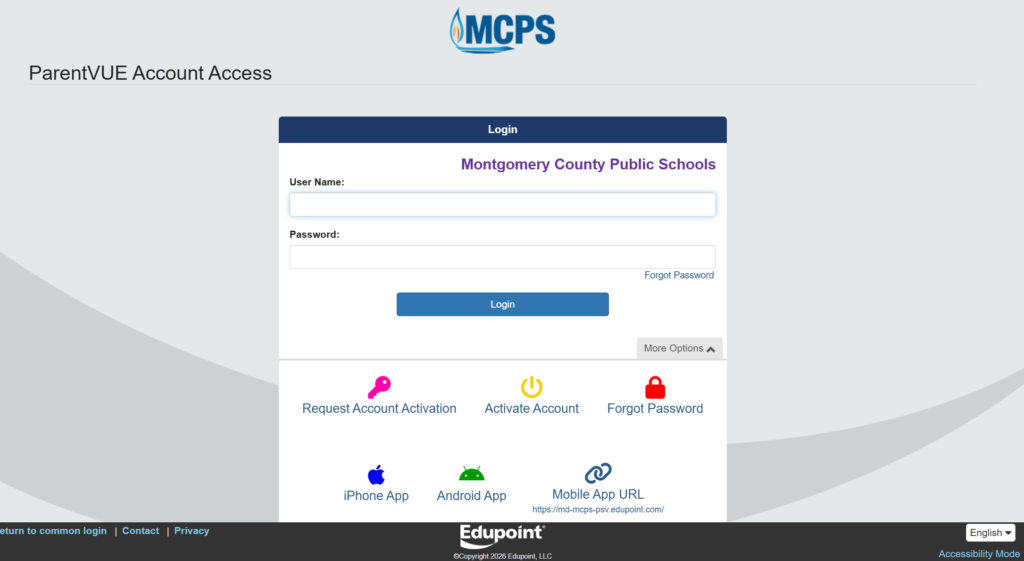
How to Log In: The Secret “Activation Key”
Because the ParentVUE portal holds highly sensitive, legal information about a minor (your child), the security to get inside is very strict. You cannot just click “Sign Up” like you do on Facebook or Netflix. You have to prove you are the real parent.
To get your account, you need a secret code called an Activation Key.
- Getting the Key: Your child’s school will usually hand you a piece of paper with this key printed on it during back-to-school night. Or, they will mail it to your house in a sealed envelope. It is a long, crazy mix of numbers and letters (like XYZ-123-ABC-987).
- Activating: You go to your school district’s specific website on a computer, click “I am a Parent”, and type in that long Activation Key just one time.
- Creating Your Account: After you type the key, the computer will ask you to create your own username and a password that you will remember easily. From then on, you throw the paper Activation Key away and just use your username and password!
Note: If you lose the paper with the Activation Key, do not panic! Just call the main office at your child’s school. The secretary can verify who you are over the phone and read the secret code to you.
Core Features: What You See on the Screen
When you log in successfully on your phone or computer, you will see a main screen called a Dashboard. Let’s look closely at the most important buttons you will use every single week to monitor your child.
The Magic Dropdown Menu: Switching Between Your Kids
If you have more than one child in the school district, look at the very top left of your screen. You will see a picture (or the name) of one of your children with a little arrow next to it.
If you click that name, a menu drops down showing all your other children! You just click their name, and the entire screen changes to show the grades and schedule for that specific child. You never have to create separate accounts or log out. It is a massive time-saver.
1. The Grade Book: Understanding the Scores
The Grade Book button is where you will spend almost all of your time. When you click it, you will see a list of your child’s classes: Math, Science, English, Gym, etc. Next to each class, you will see a big letter grade, like an “A” or a “C”.
But looking at that big letter grade is dangerous if you don’t know the story behind it. You need to know why your child has a “C”.
When you click on a specific class, like “Science,” it opens up a new page. This page shows a giant list of every single assignment, quiz, and test your child has done.
Practice Work vs. The Boss Fight
This is the most important idea modern parents need to learn. Decades ago, every spelling test and every essay was worth the same amount of points. Today, teachers use “weighted” grades. This means some homework matters a lot more than other homework. Think about it like a video game.
- Practice Work (Teachers call this “Formative”): These are daily homework sheets, 5-minute warm-up quizzes, or vocabulary flashcards. They are just for practice. Because it is just practice, teachers make these worth very few points. They usually only make up a tiny bit of the final grade (like 10% or 20% total).
- The Boss Fight (Teachers call this “Summative”): These are big end-of-the-chapter unit tests, giant science fair projects, or a 5-page typed essay. They are meant to prove the child learned the material. Because they are so big, these make up a huge chunk of the grade (like 80% total).
Why this matters for parents: Let’s say your daughter brings home a worksheet with a giant red “F” (50%) on it. In the old days, you might ground her! But wait. Open Parent Vue. Look at what type of assignment it was. If it was a “Formative” practice worksheet, that “F” might only drop her overall grade by 0.5%. Take a deep breath. It was just practice!
But if she got a 50% on a “Summative” unit test (A Boss Fight), her overall grade will crash. That is when you need to step in and see what went wrong. The ParentVUE app helps you figure out when to relax and when to worry.
Missing Assignments, Zeroes, and Flags
When you look at the list of assignments, you will see colorful words or flags next to the scores.
- Missing (Red flag): This is the ultimate danger zone! A red missing flag means your child did not hand the paper to the teacher. It counts as a giant ZERO. A zero destroys a grade faster than anything else. If you see this, tell your child to search their backpack immediately.
- Absent (Yellow flag): This means the teacher knows your child was sick that day. The teacher put this flag here to remind everyone that the work still needs to be done, but they aren’t punishing the child with a zero yet.
- Excused (Green flag): This is wonderful. This means your child does not have to do this assignment at all, and it does not hurt their grade.
2. Attendance Tracking and Reporting Sick Days
The U.S. Department of Education tells us that missing too much school is the number one reason students fall behind and fail. Synergy ParentVUE makes tracking attendance incredibly easy.
- Tracking Every Single Class: If your child is in high school, teachers take attendance every single time a bell rings. If your child is perfectly on time for 1st period, but 10 minutes late to 2nd period, the parent portal will show a “Tardy” mark for exactly that class. It prevents students from skipping classes in the middle of the day without you knowing!
- Reporting Absences (The Best Feature!): Remember the old days of calling the school at 7:00 AM, waiting on hold for ten minutes, and leaving a voice message for the grumpy attendance secretary to say your kid had the flu? You don’t have to do that anymore! ParentVUE has a Report Absence button. You just click it, select your child’s name, click “Sick”, and hit submit. The school office is notified instantly.
3. Finding Your School Hours (The Bell Schedule)
Every school has different starting times and ending times. As a parent, it can be incredibly confusing to remember when to pick your child up, especially on weird half-days or early release Wednesdays.
Your ParentVUE account has a special section just for this. If you click on School Information in the menu, you can find your school’s official Bell Schedule.
- Regular Days: It tells you exactly when the doors open (for example: 8:15 AM) and when the final bell rings (for example: 3:30 PM). It also tells you exactly what time your child eats lunch, so you know not to schedule a dentist appointment in the middle of their meal!
- Half Days / Early Dismissal: It clearly shows the special shortened hours if there is a teacher meeting or a holiday weekend.
Beyond Grades: Managing the Household Paperwork
The ParentVUE portal isn’t just a grade book. It is a digital filing cabinet for all the boring paperwork that used to get crumpled up in your child’s sticky folder.
Updating Emergency Phone Numbers
If you get a new cell phone number, or if you change jobs and have a new work phone number, you used to have to fill out a paper form and hope it made it to the school nurse. Now, you just click the Student Info tab in your ParentVUE app. You can update your phone numbers, your home address, and even add a new Aunt or Uncle to the “Approved to Pick Up” list right from your phone.
Approving Classes for Next Year
When your child is in middle or high school, they get to choose their fun elective classes (like Art, Band, or Spanish). In the spring time, your child will select what they want to take next year. ParentVUE allows you to log in and click “Approve” on those choices. This makes sure your child doesn’t secretly drop out of Advanced Math to take an extra gym class without your permission!
The Document Vault (Digital Safe)
Schools generate so much paper. The Documents tab in ParentVUE is a safe, secure digital box for all your child’s most important papers.
- Old Report Cards: If you need a report card from two years ago to get a “Good Student Discount” on car insurance for your teenager, it is saved right here as a printable picture.
- State Test Scores: Every year, students take big tests for the state government to test their reading and math. The results of these tests are saved safely in this vault so you can see them.
Communicating: How to Talk to Teachers Easily
Parenting works best when you view the teacher as your teammate, not your enemy. Synergy ParentVUE has tools built right in to make talking with your teammate really easy.
Emailing Teachers the Easy Way
There is a messaging button built right into the app, often called “Synergy Mail.” This is so much better than trying to guess a teacher’s email address or writing a note on a napkin.
If you click on a teacher’s name in your child’s class schedule, a blank email pops up. Because you are logged into your ParentVUE account, the email automatically attaches your child’s name and class period to the message! The teacher immediately knows who you are and which student you are talking about.
Custom Pop-up Alerts: Do Not Go Crazy!
If you use the mobile phone app, you can set it up to send alerts (push notifications) that pop up on your screen.
But WARNING: You must be very careful with this feature! Getting too many alerts from your phone can make you feel stressed, anxious, and turn you into a parent who hovers over every single tiny mistake your child makes. If your phone buzzes every time your child gets a 9 out of 10 on a spelling quiz, you will drive yourself and your child completely crazy.
You need to go into the “Settings” button in the app and choose your alerts carefully. Here is the perfect, balanced way to set up your alerts:
| Type of Alert | What you should do | Why? |
|---|---|---|
| Missing Assignment Warning | Turn ON | You want to know right away if your child forgot to turn something in so you can help them find it under their bed. |
| Marked Absent/Tardy Warning | Turn ON | If your child skips class, or if the teacher makes a mistake, you want to know immediately. |
| Grade Drops Below a Certain Letter | Turn ON | The app lets you set a rule: “Alert me only if my child’s grade drops below a C.” This acts as a great early warning system without bothering you when they get an A or B. |
| Alert for Every Single Grade | Turn OFF | Getting a buzz on your phone every time the teacher grades a tiny 5-point vocabulary worksheet is unnecessary and exhausting. Let your child breathe! |
Pro-Tips for Success: Building Good Family Habits
Having an app in your pocket that shows your child’s grades 24 hours a day is a massive responsibility. If you misuse it, you can accidentally ruin your child’s confidence. Here are the best tips from veteran parents and teachers on how to use ParentVUE like a pro.
1. Build a Weekly Routine (Do Not Check It Every Day!)
This is the biggest mistake parents make: checking their child’s grades while drinking coffee on Monday, while at work on Tuesday, and before bed on Wednesday.
Teachers do not update grades every day! A teacher might have 150 students. They usually sit down to grade papers on the weekends. If you look at your phone on Tuesday, and then look again on Thursday, nothing will have changed, but you will have stressed yourself out.
You Need to Try the “Sunday Evening Check-up”: Sit down with your child for just 15 minutes every Sunday night after dinner.
- Praise the Good: Look at their grades from last week. Find something to praise! “Wow, you got a B on that hard science test! Great job!”
- Hunt for Red: Look together for any red “Missing” flags. Ask your child calmly, “Hey, I see this math paper is missing. Is it in your backpack, or do you need help finishing it tonight?”
- Look at the Future: Open the calendar for the week coming up. Do they have a big history test on Wednesday? Help them plan when to study.
- Log Out and Walk Away: Once you have done those three things, log out. Do not look at the app again until next Sunday! Let your child go to school and be a kid.
2. Let Your Older Kids Drive
When your child is in elementary school, you are driving the car. But when your child gets to middle school, and especially high school, you need to slide over to the passenger seat.
If your 16-year-old gets a bad grade, do not email the teacher for them. Tell your 16-year-old, “I see you got a D on this test. You need to email your teacher tonight and ask them for extra help.” The parent portal is a great tool to help you teach your children how to speak up for themselves!
Dictionary of Confusing School Words
Schools love to use big, confusing words that sound like a secret code. If you see a word in Parent Vue or in an email that you don’t understand, check this simple dictionary!
- Credit: A point your teenager earns for passing a class in high school. They need a certain amount of credits (like 24) to earn their graduation diploma.
- FERPA: This is a federal law that protects the privacy of your child’s grades. It’s the reason ParentVUE login passwords are so strict!
- IEP / 504 Plan: These are special, legal documents that give a child extra help (like extra time on a test) if they have a learning disability or medical issue.
- Formative Assessment: Practice work. Daily homework, warm-ups, or quick quizzes that help a child learn but don’t count for very many points.
- GPA (Grade Point Average): A math calculation that turns all of a high schooler’s letter grades (A, B, C) into a single number (like a 3.5). Colleges look at this number.
- Summative Assessment: A Boss Fight. A giant unit test, a huge essay, or a final project meant to prove the child learned the chapter. These are worth a ton of points.
- Syllabus: A piece of paper the teacher hands out on the first day of school. It is the rulebook for that specific class. Read it carefully!
- Transcript: The official, permanent document that lists every single class your child ever took in high school and the final grade they got. Colleges require this.
Conclusion: You Are the Co-Pilot
Moving from waiting for paper report cards to having an app like the ParentVUE mobile app in your pocket is a massive upgrade for modern parenting. It completely removes the mystery of how your child is doing when they leave the house for eight hours a day. No more guessing, no more hoping, and no more terrible surprises in June.
But remember this very important truth: ParentVUE is just a tool, not a weapon. Do not use it to constantly punish your child for every tiny mistake. Use it to guide them. If they are falling behind, use the app to catch them before they hit the ground!
By checking your child’s grades once a week on Sunday nights, sending polite emails to their teachers, and using the push alerts wisely, you will become the ultimate educational co-pilot.
Now, go find your Activation Key, download the app, and take the stress out of the school year!
Frequently Asked Questions (FAQ)
What do I do if I forgot my password?
If you forget your password, do not panic! Do not ask your child to ask their teacher, because teachers do not have the power to change parent passwords on their computers. First, look for the “Forgot Password” link on the login screen of the app. It will send a reset link to your email address. If that doesn’t work, call the school’s main office. The front desk secretary can usually reset your password in less than two minutes!
I have two children, but I only see one in ParentVUE. How do I fix this?
This is a common computer glitch. Sometimes, the school’s computer system fails to link your 3rd-grader and your 8th-grader under your single name. Do not create a second account! Call the main office at either school and ask them to “merge your children’s profiles” under your single Activation Key. They can link them together so you can use the dropdown menu to see both.
My child’s parents are divorced. Can we both have an account?
Yes, absolutely! The school district can generate two completely different Activation Keys for the same child. This allows Mom to have her own private login and Dad to have his own private login. You will both be able to see the child’s grades and attendance, but you won’t share passwords. Contact the school office to request a second Activation Key for the other parent.
Why does my child’s Google Classroom show an “A”, but ParentVUE shows a “C”?
This is the most common argument at the dinner table! Think back to the Learning App vs. Records App section. Google Classroom only calculates a grade based on the digital homework completed inside Google on the computer. It does not count the cardboard volcano they built, their participation points, or the paper spelling test they took. Synergy ParentVUE takes everything into account, from both the computer and real life, making it the true, final grade. Always trust the parent portal!
How often do teachers actually update grades in the app?
Every single teacher is different. A high school math teacher with daily quizzes might update grades every Tuesday and Thursday. An English teacher who just collected 150 five-page essays might take two full weeks to read them and enter the grades. Reading takes time! If your child turned in a big project yesterday, please give the teacher at least a week to grade it before you send an email asking why it isn’t in your ParentVUE account yet.
If I email a teacher through ParentVUE, does my child see it?
Usually, no. If you log into your specific ParentVUE account and use the Synergy Mail tool, the email goes directly to the teacher. It does not normally pop up on the student’s StudentVUE app. However, if you are discussing a major issue, it is always a good parenting practice to let your child know you are communicating with their teacher so they aren’t surprised the next day in class.